


Through one of our partnerships, Covenant Eyes received the results of over 22,000 porn addiction surveys. This survey was developed with clinical input from a Certified Sex Addiction Therapist.
Porn addiction isn’t a recognized diagnosis in the mainstream medical community. Nonetheless, tens of thousands of people self-identify as porn addicts. This is no small thing.
These survey results give us very important insights about the nature of struggles with pornography, and how to overcome it.
Different Addiction Levels
The porn addiction survey determined respondents had one of five levels of addiction, with level one being the least addicted and level five being the most addicted. Of the results, the breakdown was as follows:
Level 1: 10%
Level 2: 30%
Level 3: 37%
Level 4: 20%
Level 5: 2%
We’ve written on similar Levels of Porn Addiction here.
People Watch a Lot of Porn
Across all levels of addiction, more than two thirds (71%) of respondents said they had watched porn more than 500 times in their lives. Less than 1% of respondents had watched pornography fewer than 10 times.
Granted, this is a survey for people who likely consider themselves addicted, so it’s skewed as a sample of the overall population. However, in our Porn Stats, we’ve noted that the overall population views a lot of pornography as well.
Porn Addiction Impacts Emotional Well-being
Across all cohorts, approximately half of the respondents indicated they watched porn as a response to stress. Interestingly, half also indicated they felt shame related to the pornography that they consumed.
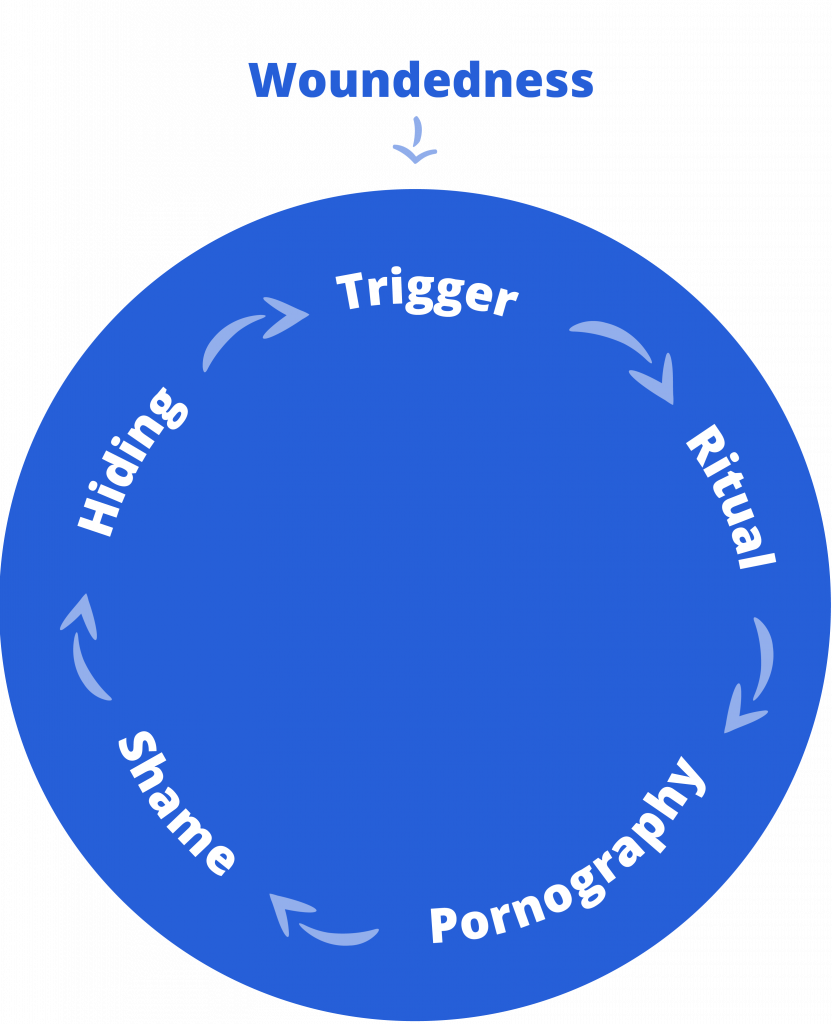
At Covenant Eyes, we’ve seen this phenomenon over and over. We call it the shame cycle: someone is triggered by a stress or another factor, they turn to pornography as an escape, then they feel shame. This causes deeper stress, which perpetuates the cycle.
Addiction Affects Self-Perception
One of the most interesting results of the survey was that in nearly all cohorts (Levels 1-4), 6% of respondents felt that pornography was “easy to quit.” However, of the Level 5 cohort (the most addicted group, according to survey results), 13% felt it was easy to quit porn. The Level 5 group was also the least likely to say it was “very difficult.” This highly addicted group was also most likely to believe they could resist strong urges.
What does this mean?
This implies that the most addicted group is also the most likely to believe they can quit at any time or resist strong urges.
Addiction Thrives in Secrecy
The Level-5 cohort was also the most likely group to be “fairly secretive” or “very secretive” about their struggle with porn.
We know there’s a close connection between compulsively watching porn and shame. It makes sense that the more addicted a person is, the more shame they would feel, and the more they would try to hide it.
Bringing addiction out of the darkness and into the light takes away its shame and power. When someone knows you struggle and has committed to helping you overcome it, but still loves you even when you fall, this gives the strength and courage to find victory.








Porn isn’t addictive as baccy or booze are. If you’ve given up fags you’ll have no problem with porn. The claim that it’s addictive is twaddle peddled by churches – or preachers like the Yank who lectured on the evils of sex and was caught 15 minutes after leaving the stage having a wonderful time with his secretary on his office desk. Hypocrisy prevails in all religions. Hence the catholic church’s paedophilia problems, clerical problems with queer rapists etc.