


The Cycle of “I Promise”
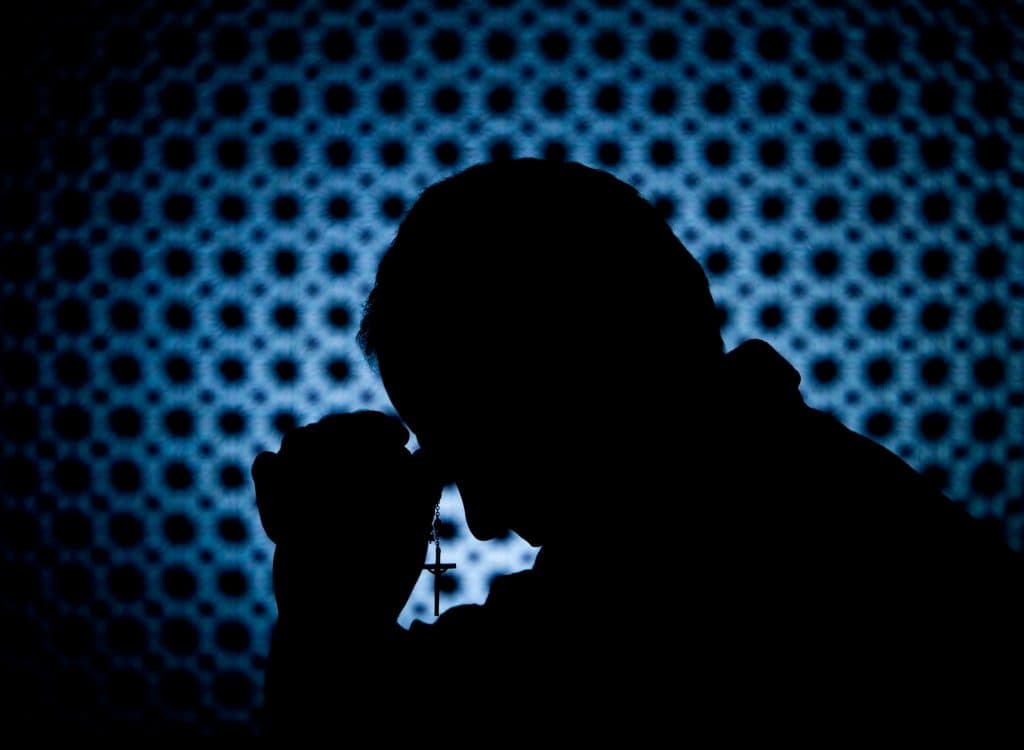
It’s Sunday night or Tuesday afternoon. Maybe you just closed a browser tab you shouldn’t have opened. Either way, something rises up inside you. It’s a mix of shame, resolve, and genuine desperation, and you make the vow:
“I’m done. This time is different. I have to beat this.”
And you mean it every single time, but deep down, you suspect the truth: the problem isn’t your commitment. It’s your strategy.
For most of us, when we fail at something we tell ourselves we just didn’t try hard enough. So, we recommit and try harder. We power our way through Wednesday, maybe Thursday.
And then we fall again.
We treat sin like muscle failure, so we think the solution is more reps, more grit, more discipline. It’s easy to hopefully think that somewhere out there is a Bible verse strong enough or a sermon powerful enough to finally flip the switch and make us the kind of person who just doesn’t struggle with this anymore.
That’s because we don’t have a willpower problem, we have a theology problem and the most freeing thing I can tell you is this:
You will not lose any sin-battle because you are weak-willed. You will lose it because you are using the wrong weapon.
Willpower is a fleshly tool, and sin is a spiritual battle. And no matter how many times we use a butter knife in a sword fight, the outcome doesn’t change.
Another truth? The Bible doesn’t call us to try harder. Instead, we’re called to something radically different: something that starts with surrender rather than more strength.
Willpower in the Bible: Is It Enough?
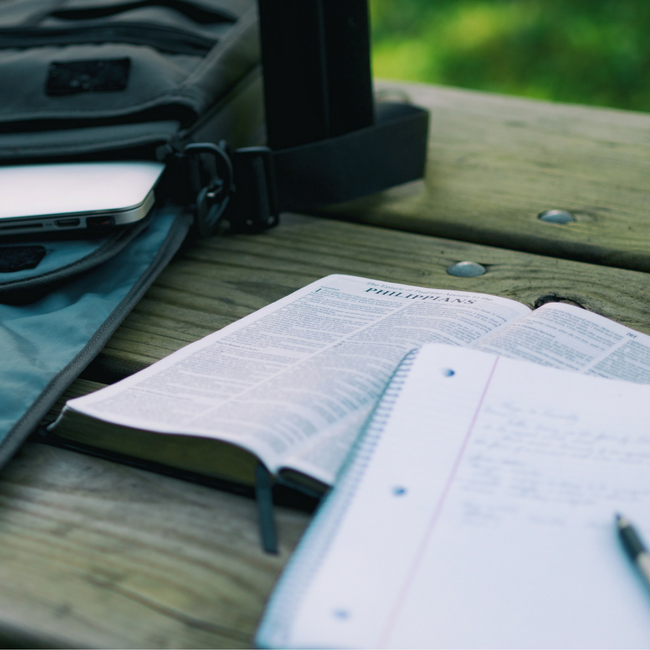
When we are struggling, and I mean really struggling, we do what makes sense. We open our Bible app and type something like “how to be stronger.” We’re looking for a verse that will rescue us right away and finally be the one that sticks, like a spiritual shot in the arm.
That instinct isn’t wrong, running to Scripture is always the right move. But we need to be honest about what we find there.
The Bible Doesn’t Actually Talk Much About “Willpower”
Search your concordance. You won’t find the word. What you will find, over and over, is the phrase self-control. That distinction changes the entire battle.
Self-control appears in Galatians 5:23 as a fruit of the Spirit, the last item on a list that includes love, joy, and peace. Think about that for a second. It’s not listed as a human accomplishment, but as spiritual fruit. Fruit doesn’t strain its way into existence. It grows from a healthy root, in good soil, with the right source of nourishment.
That means the question isn’t “how do I try harder?” It’s “am I connected to the right source?”
Willpower says, “I can do this if I try hard enough” while self-control says, “The Spirit in me is greater than the pull in me.”
One is a limited resource. You have a limited amount of it, and it depletes. You drain it on small decisions throughout the day, and by the time temptation shows up at 11pm, the tank is empty.
Self-control, when sourced from the Spirit, is renewable and doesn’t depend on you waking up on the right side of the bed or preserving your own strength all day long.
Where in the Bible to Find Willpower and Determination
Okay, fair enough. There are passages in Scripture that look a whole lot like grit and raw determination. Let’s look at the passages we gloss over when we’re looking for a loophole.
The Classic “Grit” Passages:
- Daniel resolved “not to defile himself” (Daniel 1:8). The man said “no” to the king’s table. That takes backbone.
- Paul “beats his body” into submission (1 Corinthians 9:27). He uses the language of a prizefighter: discipline, training, and discomfort on purpose.
- “Running the race with endurance” (Hebrews 12:1). Eyes fixed, weight stripped away, pressing forward no matter what.
Reading those passages, it’s easy to walk away thinking,“See? Grit is the answer. I just need to be more like Daniel.” Except, that misses the whole point of each account because there is a source behind the strength.
The Source Behind the Strength
Daniel’s resolve didn’t come from his personality alone. It came from a young man so deeply formed by the Word and his devotion to the ways of God that compromise felt genuinely foreign to him.
Paul wasn’t boasting about his personal toughness in 1 Corinthians 9. He was describing what life looks like when you are driven by a purpose bigger than yourself. For Paul, it was the proclamation of the Gospel. The discipline was in service of something greater than himself, not a trophy of his personal willpower.
And Hebrews 12:1? Read one more verse. “Fixing our eyes on Jesus, the pioneer and perfecter of faith” (v. 2). The endurance flows from where our view is locked, not from how hard we clench our jaw and pull our bootstraps up.
Thankfully, Scripture gives us good news about this:
“’Not by might nor by power, but by my Spirit,’ says the Lord Almighty.” Zechariah 4:6
“For it is God who works in you to will and to act in order to fulfill his good purpose.” Philippians 2:13
Read that second one again, slowly. God works in us to will. Even the desire inside us to do what’s right is a gift from Him. We don’t manufacture the desire and then ask God to help us execute it. He works in us at every level, the wanting and the doing.
Make no mistake though, that is not a call to passivity. Daniel still had to push the plate away. The engine behind every act of genuine, lasting obedience is not human grit. It’s grace.
The Theology of Weakness
How Does Willpower Fit with the Bible?
Honestly, willpower fits in Scripture the way a flashlight fits in a power outage. It’s not useless, but if you think a flashlight is a permanent solution to having no electricity, you’re going to be very tired and very frustrated.
Willpower has a role; it’s just not the one we typically assign it. Willpower fits as a response to grace… not as a requirement for it.
We tend to get this backwards. We think we need to get our act together before God can really use us. We treat willpower like the entrance fee, thinking “Once I’ve conquered this, then I’ll be spiritually mature enough to serve or to lead.”
But that’s not the Gospel, that’s just self-improvement with a Christian label on it.
Even Paul Hit the Wall
This is one of the most relieving parts about the entire New Testament:
The Apostle Paul, the man who planted churches across the known world, and who literally met Jesus on a road, sat down and wrote this:
“For I do not do the good I want, but the evil I do not want is what I keep on doing.” Romans 7:19
These are not the words of a new believer writing after his first week of faith. This is a seasoned, Spirit-filled, deeply devoted, extremely sacrificial follower of Jesus describing his ongoing, present-tense experience of internal struggle.
Paul tried to willpower his way through it, and he hit a wall.
The Romans 7 Reality
What Paul describes in Romans 7 is not a failure of commitment. He’s showing us the limits of what even sincere, Spirit-loving human effort can accomplish on its own.
He doesn’t end the chapter in despair, though. He ends it with a question and an answer:
“Who will deliver me from this body of death? Thanks be to God through Jesus Christ our Lord!” Romans 7:24-25
Our rescue never comes from trying harder, but from Someone else entirely. That part quietly wrecks our entire white-knuckle self-improvement strategy.
We spend so much energy praying for God to remove our weakness when He may be using that very weakness to keep us close. Paul learned this too. In 2 Corinthians 12:9, God told him:
“My grace is sufficient for you, for my power is made perfect in weakness.”
Not in spite of weakness, but in it because your struggle doesn’t mean you’re a bad Christian. It may be the very thing God is using to teach you that dependence isn’t a season, but the posture of the entire Christian life.
So What Do We Do with That?
We stop praying, “God, give me the strength to handle this” and we start praying, “God, I cannot handle this. I need You and I need people around me who can see what I can’t see about myself.”
That second prayer is more difficult because it requires something beyond willpower: honesty.
The Better Way: Walking in the Light
From Secrecy to Safety
Let’s be honest about why willpower is so appealing.
Partly, it’s because we want to win, but dangerously, it’s often because we want to win alone. If I can fix this myself, quietly and on my own terms, then nobody has to know how bad it actually got. Nobody has to see the browser history or ask the hard questions.
We start believing the lie that bringing sin into the light will harm us. But the opposite is true. For most of us, covering sin doesn’t protect us, it becomes our hiding place.
The Trap We Don’t See
Here’s the cycle that plays out in the dark:
We fall. We feel shame. Shame tells us to hide. Hiding gives the struggle more power, which leads to another fall. And the whole thing starts over, except now the shame is heavier, and the hiding goes deeper.
Relying on willpower feeds this cycle: every time we recommit in secret, we’re making the same silent promise: I can get through this. No one needs to know.
That promise is exactly what the enemy is counting on because no amount of personal resolve will deliver us, and the resolve itself stays hidden in the same dark room as the struggle.
The Biblical Remedy is Light
The answer Scripture gives us is something even more uncomfortable than another set of strict rules:
Walk in the light.
“But if we walk in the light, as he is in the light, we have fellowship with one another, and the blood of Jesus his Son cleanses us from all sin.” 1 John 1:7
Notice what walking in the light produces: fellowship, not isolation. Authentic relationships where someone knows what we are actually dealing with. Not the cleaned-up Sunday morning version of us, but the real, struggling, day in and day out version.
Light exposes the struggle and exposure changes everything.
There is something that happens spiritually and relationally when we say out loud to another human being, “This is what I am dealing with.” The shame loses its grip and the secret loses its power. The lie that says, “you are the only one” gets shattered the moment someone across the table says, “Me too. And here’s what helped me.”
We were never meant to fight alone. The “one another” commands in the New Testament, such as bear one another’s burdens, confess to one another, and encourage one another aren’t suggestions. They are the normal operating system of a healthy Christian life.
The Courage the Gospel Requires
Walking in the light takes more courage than powering through it in the dark.
Willpower only asks you to be disciplined, but the Gospel asks you to be known. And being really known, struggle and all, is one of the scariest things a person can do.
But it is also where healing happens.
When we bring what is hidden into the light, we are participating in the very dynamic that 1 John is describing: genuine fellowship, authentic community, and the ongoing purifying work of Jesus applied to our actual, messy lives, not the lives we pretend to have.
Walking in the Light Means Using the Right Tools
Walking in the light isn’t just a metaphor. It has to show up in the physical infrastructure of your daily life.
If the struggle lives on a screen, as it does for millions of people, then walking in the light means letting light specifically and intentionally into that space. In other words, light means deliberately removing the conditions that make secrecy easy.
This is where Screen Accountability isn’t a “tech fix,” it’s a spiritual response. Willpower builds a wall; Covenant Eyes builds a window.
When a trusted friend is invited into your digital life, the dynamic shifts completely. The struggle is no longer a secret battle between you and a screen at midnight. It becomes something you are navigating together, in the light, with someone who knows you and is for you.
That’s fellowship made practical, and that matters because when we introduce the conditions where the Holy Spirit’s work of conviction, confession, and restoration happen, the cycle of sin and shame is broken.
A Word to the Exhausted
If you are reading this and you are tired of the cycle, tired of the promises, tired of feeling like everyone else has it figured out except you, I want you to hear this:
You don’t have a willpower problem. You have a human problem, and there is a very real Savior who meets us in the storm. Not after we get our act together, but right here, in the middle of the mess.
The Spirit doesn’t wait for us to be strong. He shows up precisely when we admit we’re not, so stop praying for stronger willpower and begin praying for deeper dependence.
And then take one courageous step toward the light: tell someone. Use a tool that makes hiding harder. Join the long line of honest, struggling, loved people who stopped performing and started walking.
That’s not failure… that’s faith.





0 comments.