
The Best Porn Blocker for 2026
A porn blocker can be a great solution to keep unwanted content off your devices. But porn blockers shouldn’t be the only tools you use. Here’s why Victory by Covenant Eyes® pairs porn blocking with accountability to help people live porn-free.
Finding the Best Porn Blocker

Maybe you’re trying to block porn on your own devices or your child’s. Or maybe you’re trying to help someone who’s struggling with unwanted habits online. Whatever the situation, your initial solution was likely a porn blocker.
Let’s look at the different types of porn blockers, common pitfalls of a porn-blocking alone approach, and why porn blocking + accountability is such a powerful pair to achieve porn-free living.
Common Types of Porn Blockers
While there’s no end to the porn online, porn blocking apps or software can help you block inappropriate content from your computers and other devices.

But not all filtering, porn blocking, and parental controls are the same. These terms are often used interchangeably to describe very different kinds of software or hardware.
Here’s some basic information about the two main types of porn blockers: Router-Based Porn Blockers and Porn Blocking Apps or Software.
Router-Based Porn Blocking
Some routers are marketed specifically for this purpose, but most standard routers have website blocking options available.
The router may have specific configuration settings for different types of content. Or it may just give the option to block particular sites. If you’re not sure about your router, check the user manual or contact your internet provider.
This is a great first line of defense, and once you set it up, it’s automatically applied to everyone using your Wi-Fi. However, this leaves your devices unprotected outside your home, which is why porn blocking apps are also helpful.
Porn Blocking Apps or Software
Porn blocking apps or software get placed on the computer or device itself. This type of porn blocker continues to work even if the device is used at a friend’s house or on public Wi-Fi network. Victory® falls into this category.
What Features Make a Good Porn Blocker?
Within the two basic types of porn blockers—router-based blocking and blocking apps—there is a lot of variety in the offerings. What should you look for exactly?
Well, this depends on what you’re trying to accomplish. Some solutions may be great in preventing accidental exposure but completely ineffective for someone actively seeking out porn.
Different Blocking Levels
A good porn blocker will have some flexibility in what you choose to block. Explicit porn only? Suggestive celebrity gossip columns or social media sites with mature or adult-themed content?
At a minimum, you want something to block all the most popular porn sites. Additionally, your porn blocker should be able to enforce Safe Search in search engines so explicit search terms will automatically be removed from the results.
Victory porn blocking has two blocking levels: “standard blocking” for blocking known porn sites and “strong blocking” for known porn sites and other sites that provide access to porn, such as Reddit.
Custom Block or Allow Lists
With any blocking tool, there may be specific websites you want to block that are not blocked by default. One example is Instagram. Because Instagram offers both safe content and pornographic content, you might want to block access to it completely.
Some filters and blockers also give you the option to allow specific sites that you DON’T want to be blocked. For example, there may be a website that deals with sexual health or other mature themes that you want to access.
An important thing to keep in mind is who can access these blocker settings. Covenant Eyes porn blocking gives the option for any member to block websites for themselves. However, only the Filter Guardian can allow a website that has already been blocked.
Monitoring and Reporting
Screen monitoring is an essential feature if you’re looking to quit porn, protect your kids, or help someone else quit.
A screen monitoring report allows you to celebrate victories with a trusted ally and have honest and caring conversations about successes, setbacks, and triggers. It can give insight into other sites you may want to block and notify your ally if porn does make its way on the device.
Some programs just report a list of the websites that are accessed. This can be confusing and inaccurate. Victory monitors the images that appear on the screen and uses artificial intelligence to detect porn. Our software delivers an easy-to-use feed of device activity to you or a chosen ally and alerts if concerning activity is detected.
After 25 years and helping over 1.7 million people live porn-free, we’ve found these transformative accountability relationships really make all the difference.
Pitfalls of a Porn-Blocking Only Approach
Porn blocking apps and internet filters play an important role in living porn-free. Unfortunately, using a porn blocker alone to quit porn rarely helps anyone actually quit for good. Here’s why…
It’s not possible to block all porn!
While there is great technology out there to block the bad stuff, none of it works perfectly for every possible situation. There’s too much online porn and too many ways for it to slip through the cracks or for people to find ways around the porn filter.

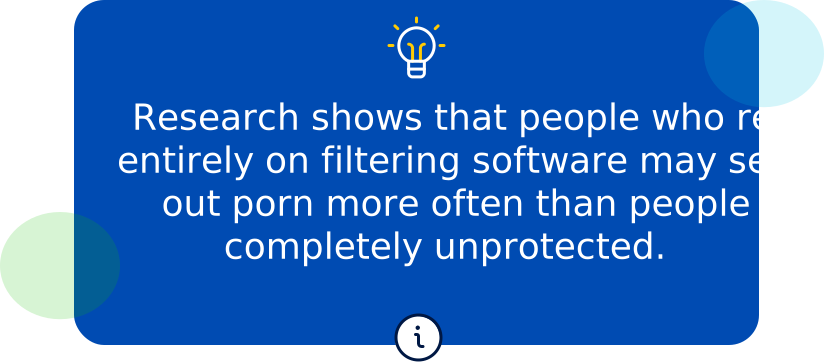
A porn blocker-only approach makes you more likely to seek porn.
Stats from the Barna study The Porn Phenomenon show that filters alone, don’t work for those who want to live porn-free lives. The study found that 54% of the general population say they “never” seek out porn, while 0% of filter users say they “never” seek out porn. This stat is alarming for those trying to live a porn-free life.
Some people discover that filters and porn blockers actually challenge them to find ways to seek out porn. It becomes a fence they can’t resist trying to jump over.
Porn blockers don’t notify anyone if you find a way around it.
If someone does find a way around a porn blocker, it won’t notify anyone. This anonymity and isolation make it harder for someone who wants to stay away from porn.
While it’s important to set up porn blocking on your devices or network, it’s equally important to be aware of the limitations.
For someone looking to quit porn or a parent looking to protect their children, porn blocking isn’t enough. Good thing there’s a proven solution that works.
Accountability + Porn Blocking = Proven Solution
The limits of porn blocking are a major reason why Victory by Covenant Eyes features accountability reporting in addition to porn blocking, making us unique among porn blockers.
Unlike a porn blocker or parental controls alone, accountability is not about controlling behaviors. Rather, it’s about harnessing the power of relationships to live a porn-free life.
With Victory, you invite an ally to see a report of your device activity. Your ally sees where you go online, and this removes the temptation to seek out porn, while our porn blocking works in the background to help prevent porn from ever showing up on your screen.
Whether you want to break free from porn yourself, protect your kids, or help a friend, having an accountability reporting solution in addition to porn blocking is critical to success. Victory is unique among porn blockers because we offer both blocking and accountability, giving you the best possible path to success.
Victory by Covenant Eyes
Powerful porn-blocking, but it doesn’t just block access to porn; it also harnesses the power of relationships to help you live porn-free.
- Works on Mac, Windows, iOS, Android
- Protects unlimited devices
- Monitors screens and reports device activity to an ally you choose
- Provides different blocking levels & enforces Safe Search
- 30 Day Money-Back Guarantee

